Key Takeaways
- Roof leaks often start with damaged shingles, flashing, vents, failed sealants, or ice dams forcing water under roofing layers.
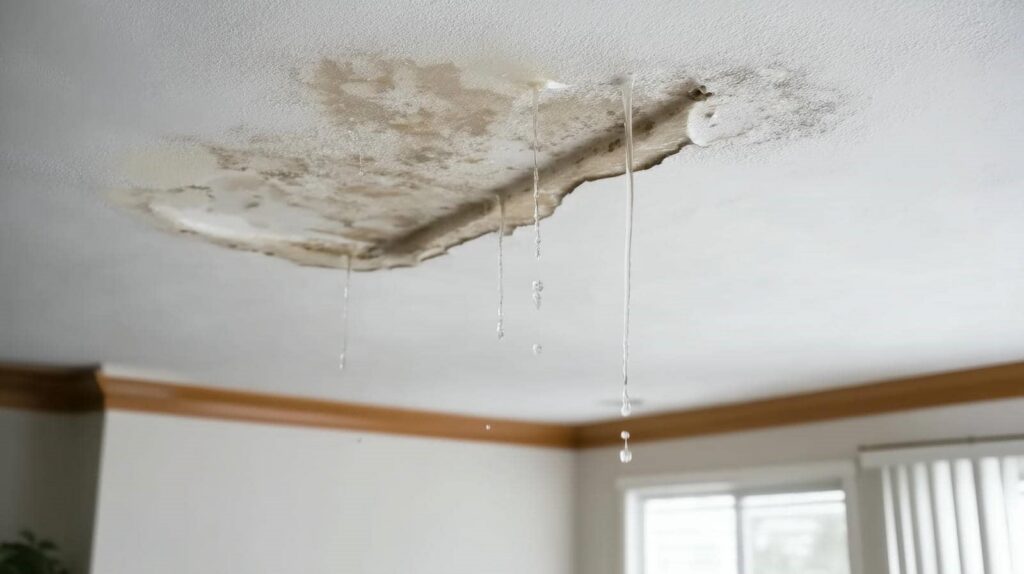
- Inside signs include brown ceiling stains, peeling paint, sagging drywall, musty odors, and warped trim or flooring.
- Stop the leak quickly by finding the source, covering it with a secured tarp, and documenting damage for insurance.
- Remove standing water, dry the area with fans and dehumidifiers, and inspect hidden moisture in walls, insulation, and floors.
- Repair roof damage promptly and replace wet materials; call a professional if the water damage is extensive or persistent.
What Causes Roof Leak Water Damage
Roof leak water damage starts when water enters through damaged shingles, flashing, vents, or other roof openings and spreads into your home.
You face water damage from leaking roof when wind lifts shingles, sealants fail, gutters back up, or ice dams force meltwater under roofing layers. Age, storm impact, and poor installation can weaken barriers and let moisture reach the decking.
Once water gets in, it follows framing, insulation, and wiring paths, so you need quick inspection and repair.
You can reduce risk by checking roof penetrations, clearing debris, and fixing missing or cracked materials before the next storm.
If you spot recurring leaks, call a qualified roofer fast to protect your space and keep your home secure.
Signs of Roof Leak Water Damage Indoors
If water has gotten through your roof, you’ll often notice indoor warning signs before the source is obvious.
Watch for brown ceiling stains, peeling paint, and soft or sagging drywall, especially near exterior walls and attic access points. You may also see bubbling wallpaper, warped trim, or damp insulation exposed in closets or vents.
A musty odor can signal hidden moisture in wall cavities or above ceilings.
On floors, check for discoloration, cupping, or unexpected soft spots under carpet and laminate. In colder months, localized mold growth may appear where moisture lingers.
If you belong to a home that already shows one of these clues, inspect nearby rooms as a group, since leak paths often spread beyond the first visible mark and can damage shared structural materials.
Stop the Leak and Protect Your Home
Find the leak source as soon as you can, then patch or isolate the damaged section to stop active water intrusion.
If the roof area is exposed, tarp it tightly and secure the edges to keep rain out.
Take quick steps to prevent more interior damage to your ceilings, insulation, walls, and floors while you arrange repairs.
Locate Leak Source
Start by tracing the leak to its highest visible point and stopping water at the source if you can do so safely. You’ll usually find stains, drips, or damp insulation below the true entry point.
Inspect the roof deck, flashing, vents, chimneys, skylights, and fastener lines from inside the attic or upper space. Use a flashlight and note any wet wood or daylight showing through seams.
- Mark the first wet area.
- Follow water paths uphill.
- Check roof penetrations.
- Look for cracked sealant.
- Photograph each finding.
If you’re unsure, compare interior damage with exterior roof features to narrow the source.
Act quickly, stay safe, and trust your crew-style approach: careful checks now help you protect the structure and guide cleanup decisions.
Tarp Exposed Areas
Once you’ve confirmed the leak area, cover any exposed roof section with a tarp to keep more water out and limit further damage.
Use a heavy-duty tarp that extends past the damaged area by at least 3 feet on all sides. Position it from the roof peak downward so water sheds over the covering. Secure the tarp with 2×4 boards, screws, or roofing nails along the edges, and avoid leaving loose corners that can flap in the wind.
If the roof is steep or unsafe, stay on the ground and call a pro. Check that the tarp lies flat, seals the opening, and won’t pool water.
A tight temporary cover helps your home stay protected until permanent repairs begin, and you’re not dealing with preventable added damage.
Prevent Further Interior Damage
After you’ve limited the roof exposure, move quickly to prevent further interior damage by stopping active leaks and protecting affected rooms. Shut off water-fed fixtures near wet ceilings, then catch drips with buckets and plastic sheeting. Move furniture, electronics, and textiles out of the splash zone so your home stays safer and your crew can work faster.
- Place absorbent towels under wet seams.
- Ventilate with fans and open windows.
- Remove soaked rugs and pad.
- Mark stained drywall for repair.
- Document damage for insurance.
If water is pooling, use a wet vacuum and check for hidden spread behind trim. You’re not handling this alone; quick, organized action helps your space recover cleanly and keeps your household confident while restoration starts.
Remove Standing Water and Dry Fast
You should remove standing water immediately with pumps, wet vacs, or absorbent materials to limit spread into ceilings, walls, and floors.
Then you need to dry the area fast using fans, dehumidifiers, and open airflow to reduce moisture retention.
The quicker you act, the lower your risk of mold growth and structural damage.
Standing Water Removal
Standing water needs immediate removal to limit further water damage from a leaking roof. You should act as a team member in your own cleanup: assess the depth, isolate the area, and remove water safely.
Use
- a wet vacuum for shallow pooling
- a mop and bucket for small spots
- towels to capture edges and corners
- a sump pump for larger volumes
- sealed containers for soaked debris
You’ll protect ceilings, insulation, walls, and floors by preventing water from spreading under materials.
Check under furniture and along baseboards, where moisture hides. Keep electrical devices away from wet surfaces, and don’t step into deep water.
If the water keeps returning, you may have an active leak that needs repair before cleanup continues.
Rapid Drying Methods
Once the standing water is out, fast drying helps limit damage from a leaking roof and cuts the chance of mold growth. You should open windows, run fans, and place dehumidifiers in the affected rooms to move moist air out quickly.
If ceilings, insulation, or drywall got wet, remove damaged materials so hidden water can’t linger. Lift carpets and baseboards to expose trapped moisture, then dry both sides.
Keep HVAC fans running only if they’re not spreading contamination. Check humidity with a meter; aim for below 60%. Inspect daily for soft spots, odors, or discoloration.
Acting fast helps you protect your space, keep your home safer, and stay part of a crew that handles roof leaks the right way.
Repair Roof Damage Before Mold Spreads
Repair roof damage quickly to stop moisture intrusion before mold can take hold. You need to trace the leak path, then seal or replace the failed shingles, flashing, or underlayment. When you act fast, you protect your home and keep your crew on the same page.
- Inspect attic decking for soft spots.
- Replace wet insulation with dry material.
- Tighten or reseal roof penetrations.
- Patch minor holes with compatible roofing sealant.
- Confirm interior surfaces are fully dry.
After repairs, keep airflow moving and check stained areas daily. If you leave damaged materials in place, trapped moisture can feed mold within 24 to 48 hours.
You’ll reduce odor, limit staining, and avoid further structural deterioration by fixing the roof first, then verifying the space stays dry.
When to Call a Water Damage Cleanup Pro
If the leak has already soaked ceilings, insulation, walls, or flooring, you should bring in a water damage cleanup pro right away.
You need help when water keeps spreading, stains grow, or your home smells musty. A pro uses moisture meters, thermal imaging, and industrial drying equipment to map hidden damage fast.
Call sooner if the roof leak affected multiple rooms, dripped near wiring, or happened during heavy rain. You’ll avoid guesswork, reduce structural risk, and limit mold growth.
A trained team can also document damage for your insurer and coordinate safe cleanup steps.
If you’re unsure, trust your instincts: persistent dampness, swelling materials, or repeated leaks mean it’s time to let experienced professionals take over together.
Restore Insulation, Drywall, and Flooring
After the area is dry and the source of the leak is fixed, you can begin restoring insulation, drywall, and flooring. Remove any wet insulation, since compressed fibers lose performance and can trap odor.
Cut back damaged drywall to clean edges, then patch, tape, and finish the seams. For flooring, evaluate each material separately; some sections can dry in place, while others need replacement. Work methodically so your space feels safe and whole again.
- Replace soaked insulation
- Trim and remove weak drywall
- Dry subfloor before reinstalling flooring
- Match replacement materials to existing finishes
- Check for hidden moisture before closing walls
Use clean tools, wear gloves, and keep debris contained. If you stay organized, you’ll get your home back in service faster and with less stress.
Prevent Future Roof Leaks and Repairs
Prevent future roof leaks by inspecting the roof regularly, especially after storms, and fixing small problems before they spread.
You should check shingles, flashing, vents, gutters, and sealant for cracks, gaps, or lifting edges. Clear debris so water drains fast and doesn’t back up under materials. Replace damaged shingles right away, and tighten loose fasteners before wind makes them fail.
If you spot staining in the attic, trace the source and repair it before mold grows. Schedule professional roof maintenance once a year so your home stays protected and your household feels secure.
Document each repair, because a simple log helps you and your contractor track weak points. When you stay proactive, you protect your space, your comfort, and the people who share it.
Frequently Asked Questions
How Long Can Hidden Roof Water Damage Go Unnoticed?
You might miss hidden roof water damage for weeks, months, or even years. You’ll notice stains, odors, or mold only after materials weaken, so inspect regularly and act fast when you suspect leaks.
Does Homeowner’s Insurance Cover Roof Leak Cleanup Costs?
Usually, your homeowner’s insurance covers sudden roof leak cleanup costs, but not wear, neglect, or maintenance issues. You should review your policy, document damage, and file promptly to improve your claim’s chances.
Can Roof Leaks Damage Electrical Wiring Inside Walls?
Yes, you can have roof leaks damage electrical wiring inside walls, causing shorts, corrosion, or fire risks. You should shut off power, inspect affected circuits, and call a licensed electrician right away.
What Health Risks Come From Mold After a Roof Leak?
Mold can wreck your lungs, trigger allergies, worsen asthma, and cause headaches, fatigue, and sinus irritation. You can feel miserable fast, so remove it quickly, dry everything thoroughly, and wear protection.
How Do Professionals Detect Moisture Behind Ceilings and Walls?
You’ll see professionals use moisture meters, infrared cameras, and hygrometers to pinpoint hidden dampness behind ceilings and walls. They’ll also inspect stains, probe materials, and map readings so you can trust targeted repairs.
Recap
When you tackle roof leak water damage early, you protect your home like closing an umbrella before the storm deepens. Find the source, dry the wet areas fast, and replace damaged materials before mold takes root. Check your attic, insulation, and ceilings for hidden moisture. Then schedule regular roof inspections so small cracks do not grow into costly repairs. With quick action and steady maintenance, you keep your home strong, dry, and ready for the next rain.